effectiveness

Should you love your job?

wpid-2015-02-18-08.05.11.jpg.jpeg

The words “love” and “job” right there, side by side. An unlikely couple. A job is, well, a job. And love? That’s what we reserve for soul-mates and family members. Except we salt our everyday language with it.  We love our new shoes, we love our car, our pets, our vacation, and our friends’ photos on Facebook (even when we’re really just tired of their endless selfies).

Love it!

But are we supposed to love our jobs?

The answer shouted from the electronic hilltops seems to be love it or quit!

And if you don’t? Well, you’re obviously missing out because it’s easy, there are five steps to get you there, two things you need to know, one program that will show you how. etc. etc. These messages, in total, potentially undermine our happiness at work because they ignore one basic truth: nobody loves their job all-the-way-all-the-time.

We’ve gotten used to the idea that when we love something, it’s easy. Even the profiles and stories about people who have sunk their heart and soul into creating a company from scratch or pursuing a lifelong dream tend to have a gloss of “meant to be” applied over the intense work of getting there.

When we read the story, we already know the ending. We know they’ve made millions and are living the dream in their beachside house full of windows that someone else wipes clean each morning. It seems inevitable.

But it wasn’t. They probably didn’t love every moment of the stress, the risk, the uncertainty along the way. But they kept going. It wasn’t love, it was something else.

No matter what you’re devoting your time to, there’s a level of uncertainty. We don’t know what our choices will yield. We don’t know how our story will turn out.

To look at someone else’s polished-for-print story and wonder why we don’t have the same trajectory is to overlook the life we’re living.

What does it mean to love your job? 

Sometimes, a day goes like this:

Get to work, find six angry emails in your inbox, meeting 1 falls apart, someone quits, there’s a personnel issue that pops up, two key players on your project are fighting, and the contract you thought had been approved and finalized is sitting on someone else’s desk and you can’t start that project which sinks your entire schedule, and you still have all the work you’d been planning to do this week piling up.

Can you have a day like that and still love your job?

Sure.

If you’re lucky, you have a job where the satisfaction of  doing, learning and growing outweighs the annoyances and friction that are part of any job. Any life, really.

Does the overall satisfaction I get from my job outweigh the minor annoyances?

Are you spending your time on something that matters to you? This is a question that only you can answer. It’s your time and once it’s spent, it’s gone. Are you doing something that makes you feel good about that time? Maybe you love the challenge of the job itself. Maybe the job is the stable way you support your family and maintain some freedom for your personal pursuits when you’re off. Either way, you’re the only one who can judge your satisfaction.

Using someone else’s measure won’t help. So put down that smart phone for a moment and think it over.

What if I really do hate my job?

If you have a job you hate, should you stay? Probably not. When the grinding weight of showing up day after day is wearing you down and sapping your ability to function as a decent human being, you should find something different to do. Your unhappiness is probably having a negative impact on the people around you, not to mention the horrible things it’s doing to you.

But if you’re on the fence, and some days are okay and others aren’t, I think you have a more difficult but potentially more rewarding option: work it out.

Work it out

When your partner is tired of hearing you grumble (or when you’re tired of hearing yourself grumble) it’s time to work it out.

What would boost your satisfaction level at work?

Are there things you can do for yourself, instead of looking to others to fix them?

Are there things you need someone else to open up for you?

  • Ask for a new assignment?
  • Offer to show you’re ready for a new responsibility?

There is a great deal of satisfaction in doing something instead of suffering though it. By taking thoughtful action, you may be able to turn the job your’e currently in into one that satisfies you.

Making it better for yourself? That’s something to love.

Seven things that actually mattered

wpid-2015-01-30-07.20.05.jpg.jpeg

Pick a Puddle.

At my freshman orientation for college (year omitted!) the university’s president said “Don’t be like ducks, with opportunity rolling off your backs like raindrops. Take advantage.” I thought I got it. I wasn’t going to be that duck. I chased a lot of rain, which was great. For a while.

Looking back, I realized he forgot a key point: Don’t forget to pick a puddle.

If you find your puddle and fill it with the things you care about most, you get the good out of it. Puddles don’t have to be small and limiting. They should have room for the things you’re focused on – family, key career ambitions, personal growth – and they should’t overflow with things that distract you from your integral purpose.

Picking a puddle brings focus. It also means saying “no” to the distractions. The nice-to-have resume builder that you don’t really care about? No, thank you. The I-really-should obligation? Maybe there’s someone out there who actually wants to do that one.

This idea really hit home for me when my kids were little. There were other moms in their preschools who volunteered in the mornings and put together events. I worked. I scrabbled time off to go to the early-afternoon cupcake party or the holiday parade, but every time I passed on the sign-up list I felt like I was letting my kids down or somehow being a second-rate mom. I realized that I had to make peace with this situation or drive myself batty.

So I focused on what I could do. I took good care of my kids. I provided supplies. I attended the events the other parents organized. And I let got of feeling like I wasn’t doing enough to pitch in. Much  of my work has been community-focused, taking time and energy during evenings and weekends. That’s my puddle. My kids’ well-being is my puddle. They didn’t care whether I was being a super-mom in everyone else’s eyes. They just wanted to know that I came to their event and that I cared about them. That was enough.

Be purposeful in your career.

Purposeful is not the same as ambitious. Ambition is great. Positive ambition moves us forward, gives us direction, and helps make the world a better place. Ambition alone can be directionless. It can propel us through choices, through jobs, through decisions yet still leave us hunting for the next gold star or seal of approval.

Purpose depends on understanding what’s important to you and making your decisions with both your short-term satisfaction and your long-term interests in mind.

Purpose helps you shape decisions, see opportunities, and follow a path that may not always be direct or clear, but brings you meaning along the way.

I’ve had friends who went for the higher salary and better title with each promotion only to find themselves making a lot of money, living in a nice house, and wondering how they’d ended up there. They could tell their story – they’d been ambitious and collected all the prizes – but they ended up saying things like “I never thought I’d work in a company that doesn’t really do anything.” or “I just make lots of money for other people and they let me keep some.”

Other people I’ve known have been deliberate about taking only opportunities that delighted them at the moment and are left wondering where all the time and money went.

I’ve done both. Taken jobs because they were safe or necessary. Taken risks because I felt cornered. It wasn’t until I started to develop a better sense of my puddle and my purpose that I could begin to make decisions with some long-term meaning.

For some people, this appears to be easy. They seem to know their purpose and pursue it with great intention. When I listen to my friends, co-workers and family though, I believe that most of us don’t have this kind of singular drive. In a world of endless opportunities and choices, this part of career management is a learned art.

Learning yourself is a good place to start.

Don’t stay in bad relationships.

We’ve all gossiped about someone in a bad relationship. Why doesn’t she leave him? Can’t he see what’s wrong with this situation? Most of us know that it’s really hard to see from the inside what we clearly see (or think we see) from the outside.

We stay for many reasons. We fear failure and loss. We rationalize, we make excuses, we don’t question our story about how we arrived here and why we stay. But our story is just that. It’s a story we tell ourselves about the path we’ve followed, the choices we’ve made, and how they all hang together. The thing to remember is that we are writing that story all the time. When you find yourself stuck, wondering where the love went, it’s time to put on your best-friend-perspective and try to see your situation from the outside.

If a co-worker is consistently egging you into situations you’re not comfortable with, maybe it’s time for a new relationship.

If you’re not feeling fulfilled by the choices you’re making about your time, maybe it’s time to choose differently.

Sometimes we stay because we “owe it to them.” Loyalty is good. But be sure you’re being honest. Loyalty that’s a cover for fear, insecurity, or failure to reflect is not good. It’s fine – admirable – to be loyal, and, like with any good relationship, you will change, you will grow, and you can participate in the relationship to make sure you’re getting what you need out of it. That’s when everybody comes out stronger.

Focus on your strengths and fill in your gaps

There are a lot of people out there who are willing to tell you what your weaknesses are and how to fix them. It’s easy to get sidetracked into a self-bending case of triple-i: Insecurity, inadequacy, inferiority. Don’t go there.

You’re not perfect.

But you already knew that.

I remember a favorite teacher telling our class that her job was to help us learn to think. “You need to know how to think and how to find information. You don’t need to memorize the dictionary.”

Find out what you’re really good at and focus on that first. Great with numbers? Master everything you can about budgets, financing, and software. Good at people? Get some experience mediating, leading discussions, and public speaking. Shine.

When you realize you’re not good at something, don’t obsess, just fill in the gaps

You’re the numbers guru but not great at public speaking? Offer to make a budget presentation to your group. Take your strength and use it to support your attempts to fill in your gaps.

Great at leading teams but terrible at meeting deadlines? Get your best performing team together and poll them for suggestions. Then put them in play.

Any change requires discipline, doubling up something that’s easy for you to do with something you need to improve gives you more energy to pull through the tough parts.

Fix. Don’t obsess.

Learn to have difficult conversations

Here’s the exception to “don’t obsess.” If there’s one thing I think we should all obsess over, it’s learning how to have difficult conversations.

Figure out what you fear (confrontation, anger, being wrong, being vulnerable) and find out how to get better at it. There are resources out there. Read them. Learn them. Practice.

This is one skill that you can, and should, master.

It will make you better at everything.

Stuff happens. To everyone.

It’ll happen to you. The thing you didn’t expect that knocks you off your track. It may be temporary, it may be life-altering. It will happen. Probably more than once.

It’s never over.

Keep going.

Ask for help.

It’s probably happening to someone you work with right now.

Give help.

We’re all in this together.

Have a heart

Take a moment to say hello. Notice something. Ask a question. Those people you work with? The ones who annoy you, don’t meet your deadlines, and can’t see what’s completely obvious to anyone who would stop to think for two seconds? There’s probably something good about each and every one of them.

Some of the best conversations I’ve had have been with people I didn’t particularly like at the time. But if you’re willing to set that aside and listen, you may find that they’re only human. They have lives, problems, and people who drive them crazy.

You may be one of them.

You never know when somebody is trying to manage a sick parent in another state, dealing with a rocky marriage, or worried about a kid in trouble.

All you can do is respect them as fellow human beings and try to do your best.

I’ve had the good fortune to know what it’s like to work with people of integrity, to work with a sense of purpose, and to feel compassion and care for the people around me.

I’ve also known what it’s like to be a nameless cog, to be looked down upon, and to feel under-appreciated and unfulfilled. In those circumstances, it’s difficult to bring our best to the table. When I found myself babysitting the monster of all copiers for days on end, shuffling different colored papers in and out of trays and tugging torn bits of confetti from the guts of that toner-laden beast, I was not bringing what I had to offer to the picture.

When I left that job, not knowing what was next, one woman took me aside and said “I’m glad you’re leaving. You’re going to do so much more and when you need a reference, just ask.”

Her confidence gave me hope at a time when I really needed it.

Those are the people we remember.

Maybe if someone had handed me this list years ago, it wouldn’t have meant anything to me, but eventually enough experiences run together and there you have it – your puddle.

If you only change one thing in 2015 this should be it

Whether you’re a resolution-maker or not, it’s hard to escape the lists of suggestions for new tasks, goals, and ideas that sprout this time of the year.

Personally, I love resolutions. I have years worth of left-over lists, some kept, some not.

This year, I’m taking a new approach. I’m making just one resolution that I hope will have a positive impact on others: send fewer emails.

wpid-1365883044533.jpg

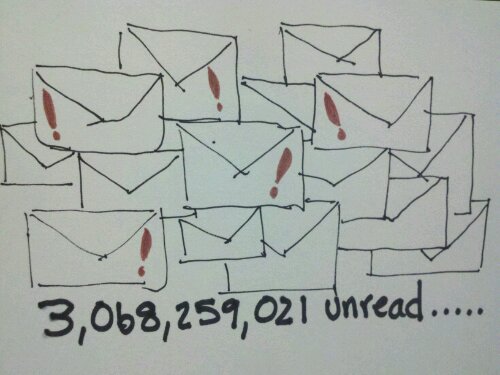
If I had to name one thing I hate right now, it’s my inbox. Crammed to overflowing with conversations I don’t need to be part of, general announcements, and strings of people trying to figure out when to meet and where, I just about want to rip my hair out when I see that dreaded “unread” number creeping up and up and up.

There are gems of important information in there. Nuggets of real work. But it’s like panning for gold. Backbreaking, endless, tedium that occasionally yields a flake or two of sunshine. And I’m pretty sure the good stuff is buried just downstream.

I’ve had enough.

But if you really aren’t ready or able  to get off email, what are your options?

You can find lots of online wisdom if you google “taking back your inbox” and “how to manage email” but they tend to read like instruction manuals for a better gold panning contraption.

I toyed with this idea last year (way back in 2014), but I didn’t make a focused effort. I dabbled, I deleted, I tried to be disciplined. But I still reverted to typing three cryptic words and hitting send when I was in a hurry. Of course, those hurried emails bounced right back at me, asking for clarification, more information, or sparking a series of conversational notes.

This year, I’m getting serious.

My resolution to send fewer emails is based on these goals:

  • Contribute less to the mess.
    • Do I need to say this? Does it offer new, relevant, or helpful information? Or am I contributing to an e-conversation that would be better handled in person?
  • Don’t pass the buck.
    • Am I sending this email as a placeholder? To let someone know I’m on it? Or to send responsibility to someone else just to get a task out of my inbox? Is there a better way to complete it now?
  • Be clear.
    • Am I writing with a sense of purpose and clarity? Am I being complete but not overly wordy? 
  • Pick up the phone
    • Will this email generate questions and additional emails that I could handle with a phone call now? Is there an emotion involved that will come through better on the phone?
  • Walk down the hall.
    • Is this an opportunity to interact, make a connection, complete the task and get moving? 

I’m hoping that this one goal – fewer sent emails – will open up some space for the working and thinking we all crave. That’s where the real gold lies.

Here’s wishing you fewer emails and better communications for 2015.

Who moved my lunch?

wpid-2014-09-26-07.00.51.jpg.jpeg

Lunch-meetings!

Lunch-and-Learn!

We’ll provide pizza!

Brown-bag-seminars!

Oh, you think you’re busy and dedicated? We’ll I’ll see you a full calendar and raise you a lunch: “Well, I’m free at noon….”

Is lunch under attack? For a long time, I’ve made it a habit not to schedule lunch meetings, or expect them of others, four days a week. If I stay at my desk, I will work, I will answer questions, I will dribble food on my keyboard, and I will go home to my family and be crabby and exhausted. So I take lunch at the gym. I do reserve one lunch a week to spend as I choose. While there are  a few people who trump my no-lunch-meetings rule, that list is short.

Gym-lunch started out of necessity for me. With kids and a busy job, it was the only time of the day I could consistently exercise. But here’s the really neat part: I’m not the only one. I see a lot of familiar faces and co-workers there, and they’re all pretty awesome workers. I keep my workouts short, eat a quick bite when I get back, and we’re off to the afternoon!

I have a theory about this – the midday workout gets you refocused, gets you through the afternoon slump (often without coffee!) and even if nothing else goes well that day, you’ve done something good. Kind of like making your bed first thing in the morning.

Over time, it’s become easier to just stick with this habit instead of constantly looking for time to exercise in a schedule that doesn’t easily make room for anything “extra”. In theory, it’s pretty easy to establish this kind of habit.

1. put it on your calendar

2. respect the time

It’s the second one that’s hard. Having a workout partner helps a lot – someone who’ll be expecting you, on time, who will be late for something else if you let “just one more task” creep into your designated time.

Finding a research partner, a reports partner or someone who’s trying to make time for something compatible with your goal could help make anything routine – the key is that the other person’s habits will affect yours, so choose your partner wisely.

As for lunch, I believe our workplace sets the tone for a lot of our activities – after all, most of us spend more time at work than anywhere else – so what habits are you cultivating at work and are they contributing to an effective workplace or a stressed-out workplace?

Why you should do your worst task first today.

“Eat a live frog first thing in the morning and nothing worse will happen to you the rest of the day.” – Mark Twain

wpid-2014-08-19-06.57.24.jpg.jpeg

I came across this Mark Twain quote last weekend and it struck a chord. One of the habits I have had to overcome (okay, I’m still working on it!) is procrastination through productivity. I’m mean really, nobody wants to eat that frog first thing in the morning, right?

Yesterday morning, I got to work at 7 am. I am not normally the earliest-arriver at my office. My philosophy is to be fully present and to work really hard while I’m at work – no coffee breaks, not too much chatter, focus on the work. That allows me to preserve time at home to be with my family and to have other interests. It doesn’t always work perfectly, but that break between work and home is important to keeping us motivated and fresh.

Yesterday was different. I had a few tasks that required my undivided attention at work and it’s summer. For one more week there are no busses, no evening meetings, no after school activities. Home felt cared-for.

So I went in – yawn – early, to eat my frog.

When you’re putting off that big project by doing a million little things, sending emails, filling, organizing your office instead of tackling that one big unpleasant task you need to focus on? That’s productive. But it’s still procrastination.

Here’s what usually happens. I finally decide to deal with whatever I’m putting off. I make time, I make myself do it, and when I settle in, I realize one of two things: 1) I’ve waited so long to examine the task that there’s something I’m missing and now it’s too late to get it/do a good job (this can sometimes result in a 9pm trip to the hardware store) or 2) It turns out that it’s much simpler than I had built up in my mind.

Lucky for me, yesterday’s task was simpler than I expected and I ended up having an hour to work, uninterrupted, on other projects. I felt centered and focused for the rest of the day which made me less stressed and more able to go with the flow of the day.

In our busy world, it’s easy to feel like our time and attention are constantly divided. There’s a lot of advice out there about how to structure your day and your time, how to disconnect, and how to focus. When we’re able to incorporate some of these skills into our planning, it can help us focus on what really matters.

Like frogs.


Pop Quiz! Can you do this one thing today to reduce conflict?

wpid-2014-08-12-06.59.53.jpg.jpeg

Chances are one of these happened to you during a conversation in the last 24 hours:

Device Distraction: They surfed emails/the web/your phone while you talked?

Location Distraction: They walked away to wash a dish, file a something, or do laundry but said “Go on, I’m listening.”

Attention Distraction: They made a to-do list while you talked, jotted notes for a memo, etc.

You know when you’re not being listened to, and it creates frustration, miscommunication, misunderstanding and other types of conflict.

If yore reading this, you probably already try to avoid those types of behaviors when you’re doing the listening. Although – true confession – I spent too much time being distracted by my device yesterday in a meeting. It was not pretty, but distraction is always there, lurking around the corner, ready to pounce.

We know we’re supposed to listen. And in our distracted world, it’s easy to feel like we can listen and do something else – or feel like we must be multitasking just to stay afloat.

However, learning to listen deeply has great benefits. You hear the full story when you’re really paying attention. Body language, the tone and nuance of what people are saying (and not saying). The conversation, side comments, and seemingly unrelated bit of information come together to paint the bigger picture. When we’re really present in a situation, we hear a lot more than just the words that are being exchanged.

Pop quiz: What are you thinking about right now?

Your to-do list? The chore you’re avoiding by surfing the web? Something that’s bubbling in the back of your mind?

Listening is more than just not talking. It also means not talking in your head while the other person is talking.

This is not easy, but if you can do this one thing, you will hear a lot more.

Why? Because we really can’t multitask.

When we talk in our heads, we’re making up a story about what the other person is really thinking/doing/not saying.

“S/he probably didn’t write that memo and it’s going to make us all late again and I don’t know how I’m supposed to do my part if they didn’t….”

“S/he is always late. They’re probably stopping for coffee at that place our other department goes all the time because s/he’d rather hang out with them than get our project done on time…”

– or maybe it’s a story about their character, who they are, why they’re doing something.

“S/he is so distracted all the time I’ll bet they forgot all about our other project and they’re only focusing on this one because they like the team better but our other one is really going to tie up my time….”

“S/he is always more focused on the numbers than on the big picture. I can’t believe I have to work with such a narrow-minded person….”

How do you stop?

It helps to think of a time when you were fully engrossed in what someone was saying. Maybe it was your child, or your partner. Maybe it was someone who’s an expert in something you’re fascinated by. Try to capture that feeling for a moment. Got it?

Now, practice giving that type of attention to your conversations today. Take the pop quiz – check in and see if you’re listening. Take a deep breath and bring your focus back to the conversation. (I may put away those devices today!)

Try to listen without interruption from your own thoughts. It’s not easy. But it’s worth it.

Should you find that pen drifting across your paper, about to make a to-do list, maybe you could jot down this word instead:

Listen.

Is your inability to delegate holding you (and everyone else) back?

wpid-2014-07-24-07.03.06.jpg.jpeg

You know who you are. You can’t let go. You won’t let anyone else do the work because they never get it right. You’re buried in a pile of obligations, sweating every deadline and working into the wee hours while you wonder why your  no-good co-workers and ineffective staff can’t just step up.

Been there?

Maybe you’re the boss, maybe you’re the employee, and maybe it’s not be as bad as all that, but if you have any perfectionist tendencies (guilty as charged!) you may be having a hard time with the D word. Delegation. And, by extension, maybe your staff is, too.

Delegation opens so many opportunities for things to go well or awry. Delegation is not bossing them into doing it our way. Much of our success at work comes from completing projects in a way that is valued by others. Considering delegation in this light provides some interesting insights.

Does the person you’re handing off to know what you value?

Unless you’re working with someone you have a long established relationship with and you’ve undergone some sort of mind-meld, it’s likely that you need to spend some time explaining the task, the expectations, and how you’ll communicate along the way.

For instance: “I have a project I’d like to assign to you. It’s going to have a tight deadline and some high expectations. Can we find some time today to make sure we have a shared understanding of the milestones and how I will know you’re making progress?”

Not:

To: Employee.

From: Uncommunicative supervisor

Date: Tuesday at 6:30 PM

Subject: IMPORTANT!

Hey! I really need to you to get the report pulled together for finance by friday. Ok?”


Perfection is the enemy of the good

We’ve all heard this one. And it’s true. It’s so much easier to just do it yourself instead of taking the time to show someone else how to do it, answer questions, and potentially see them fail.

But how much worse is it to stifle your staff because you won’t let them learn?  Remember when you had a supervisor who wouldn’t let you take on the projects you were eager to do?  Don’t be that supervisor.

Employees? This goes both ways. If it’s your first assignment, you want to get it right and you will have questions (you should  have questions!) Don’t hang onto that work until it’s perfect. Missing a deadline because you’re trying to polish something to perfection is not a good choice. How do you approach your boss?

Maybe:

“I know this project is important to you and I didn’t want to work too long in one direction without being sure we were still aligned. Can we check in for 5 minutes?”

And when you have that check in? Be prepared. Have focused questions then listen carefully for new information.

Remember, you’re both working at this together, if you supervisor forgot to tell you something the first time around, don’t roll your eyes and say “I can’t do this work if the direction is going to totally change every time I ask you a question!” (You get my point). They need to know you’re going to be able to work with some independence but you’ll come back to them along the way. The need for check-ins may diminish as you work together more, but even with people I’ve spent a long time working with, the check-in is essential. Things change, schedules shift, priorities rearrange – you will rarely have a complicated project that is assigned and completed exactly the way it was initially described and those are the ones worth learning.

How’re things looking from another point of view?

If you have an employee who has been offered help only to brush it aside…no, no, I got it….and they’re weary, ring-eyed, and intent on doing it themselves, you may be working with a delegation-challenged-perfectionist.

Perhaps an honest conversation about how their reluctance to delegate is impacting others will help them see their situation differently. Appeal to their better self, the one that wants to motivate and encourage others. Acknowledge that they’re drowning in deadlines and assignments and that’s not a sign of success. Ask them to help someone else grow to their level of skills.

Then listen closely. They may be able to point out areas for improvement. Together you might identify people who can help find success.

I have a mentor who regularly asked “who’s your support team?” when I talked about new projects or initiatives. It’s a life-saver of a question, worth internalizing and sharing.

Are you the perfectionist or do you work for one?

How have you met this challenge?


Mastery requires time. Where are you spending yours? And what are you mastering?

image

“Mastery is not something that strikes in an instant, like a thunderbolt, but a gathering power that moves steadily through time, like weather.”
― John GardnerThe Art of Fiction: Notes on Craft for Young Writers

I recently found this quote in a  book I’ve had on my bookshelf since the 5th grade. I underlined it sometime in the past ten or fifteen years, but it resonated in a new way.

We gather mastery over time, sometimes intentionally, sometimes by default.

We gather habits, reactions to conflict, ways of thinking, and behaviors along our way. In certain moments, we feel the satisfaction of getting good at something. Maybe it’s the thing people seek you out for, a talent you share, a way of listening. In other situations we wonder “why do I find myself here again?”

Either way, the gathering power is strong.

Gardner’s quote made me think differently this week. Where do I spend my time? What kind of mastery am I developing with my time?

It’s a great question when thinking about conflict. After all, conflict can be random, but there’s usually a storm behind the thunderbolt. It’s often brewing and gathering on the horizon and we can feel it coming. What are we doing along the way to manage it? Resorting to our usual, well-practiced reactions? Or can we try something different?

It helps to break the storm down and see if we can identify a point or two where we can practice a new technique.

  • If your style is to avoid conflict, it could be intentionally asking the person you’re avoiding a question.
  • If you hate answering phone calls and the weight of the “to-do” is robbing you of your peace of mind during the day, maybe you can answer them first thing in the morning.
  • If you’re hiding from a particular trouble, maybe you can find someone to air your anxieties with and brainstorm next steps.
  • Maybe it’s as simple as making a few minutes a day for an overwhelming and unmanageable (seeming) project?

It can be small because that’s the way mastery begins, as Gardner emphasizes.

I’m curious what kind of changes you’ve made in your approach in dealing with conflict. Were they small or storm-sized?


I think you should do this my way

wpid-1368714899045.jpg

At some point, we all find ourselves working with someone who is very organized, very thorough, and, not surprisingly, very successful at their job. This relationship can be wonderful – things happen, work gets done. But it can be challenging too, especially when they reach into your work and tell you how to do it. This type of overreaching can feel like micro-managing, or distrust, or an inability to let go. It can also bring out feelings of defensiveness and uncooperative behavior. Most of us don’t enjoy feeling bossed around.

It’s also common to play both roles, depending on the situation. Sometimes, we may be the one who “knows” how something should be done. Sometimes we’re the one on the receiving end.

On the receiving end, figuring out how to establish some boundaries is essential. Whether it’s a boss, a friend, family member or co-worker, some version of a firm stance may be in order. Especially when it seems that all the politeness in the world can’t get the message across.

I’ve witnessed plenty of blow-ups in these situations (or been the one blowing up), and it doesn’t do any good. The initial shock into silence can be a welcome relief. But it can also lead the overreacher to be further convinced of your inability to do things well and the cycle eventually picks up again.

The passive-aggressive approach doesn’t work either. Pretending that we’ll do things their way and then doing it our way is really only being aggressive in a different way. As a result, distrust builds and they may try even harder to reach in and control us next time.

How do we claim our territory without blowing our top?

  • It’s helpful to acknowledge the other person’s concerns. “I hear you’re worried about how I will present on this topic…..” This requires careful listening when we’d really rather fume about how they have no right to try to boss us around.
  • It’s important to tell them what you will or won’t be able to do about their concerns. This confirms that you heard them clearly and sets good expectations. For example, “I will reflect your concerns about xyz in my presentation but I will not be changing my information about abc from what you already saw.”
  • Tell them what to expect. Maybe, “I will share an outline with you before the meeting, but I won’t make additional changes at that time.”
  • Then stop.

I believe it’s important to be clear with others about your thinking, what you will do, and what they can expect as a result. I also believe it’s okay, when this person really is overstepping their boundaries, to have the self-respect to turn your attention to your work.

If you think you might be the overreacher, listening for these types of clues might be  a good place to start.

It’s a touchy situation, especially when the person you’re dealing with is someone you will have to continue to work with. Even when you think you won’t, I don’t recommend burning bridges. I’m sure others have found other ways to set boundaries with people who’d like to tell you how to do your job.

Do you think you do both of these? Neither? Do you have a suggestion?


Tug ‘o War

When was the last time someone handed you a rope and said “hey, how about you pull really hard on your end, and I’ll pull really hard on my end, and when one of us falls flat on our face, it’s settled. Okay?”

Eighth grade P.E. class, maybe?

For me, it was last weekend. Except it wasn’t a rope, it was an argument. The same stupid argument we have over and over. And nobody ever wins this particular one. we just pick up our ends of the rope, dig in, and start heaving our weight around. There’s a lot of mud involved and the emotional equivalent of strained muscles.

In the middle of all the pulling and tugging I wondered “Why do we keep tugging? Why not let go of the rope?”

Arguments can go wrong in so many ways when the emotions are high. We say things we don’t intend, we drag up battles of years past, we resurrect old hurts, previous slights, and the reasons to continue arguing pile up. But most of us don’t relish tug ‘o war and the repair cost can be high.

Some graceful ways to let go and buy yourself a little time to cool down without dropping your opponent (or co-worker, or family member) on their derriere.:

Take responsibility for your emotional state:

  • I’m getting (angry/frustrated etc.) and I need a few moments to calm down.
  • I want to come back to this discussion but I’m not thinking clearly right now, can we take a ten-minute break?

Own your role in what’s going wrong:

  • I’m starting to say things I don’t mean because I’m angry/frustrated/sad. Let’s take a break to calm down.
  • I think I’m being unfair because I’m feelilng (fill it in….). Can we take a break?
  • I know this is important to you and I want to listen carefully. I’m not able to do that right now.

For work-place situations:

  • I think you’ve made some good points and I need some time to think them over. Let’s schedule a follow-up conversation.
  • I’m going to need some time to consider this information. When can we get back together?
  • I can see this is important to you and I don’t have time right now to give it my full attention. Can we come back to it?

It’s very (very!) tempting to tell the other person all the things they’re doing wrong and enumerate all the reasons you can’t possibly have a productive conversation with them, but these kinds of statements probably won’t help:

  • You’re so unreasonable/irrational/mean/wrong that I just can’t talk to you.
  • You never/always …………(anything).
  • You don’t know what you’re talking about.
  • You should feel…..(any emotion)
  • Oh yeah? Well remember the time you did (this other thing that’s not related to the topic at hand but I’ve been dying to bring this up….)

Ideally, we wouldn’t get into these heated situations in the first place, but once it happens, putting down the rope until you’ve both had a chance to cool down and think things through can save a lot of struggle.

I’m sure there are many other great ways to stop fighting out there. What’s worked for you?